Twitter Updates

    follow me on Twitter

    Wednesday, December 31, 2008

    Is Your Church in Need of Financing for Important Equipment?


    If you are, you recognize how choosing the right finance company can make the process easier.

    Allow us to make it a breeeze.

    All Media Capital recognizes that there is a funding need for worthy churches and has programs designed specifically for your organization, enabling you to purchase the equipment you need for your congregation now. Our packages are truly best in the commercial finance market when it comes to helping local churches.

    Through these programs, we can finance the following:
    · Organs
    · Sound/Audio Equipment
    · Video equipment
    · Pianos
    · Air-Conditioning Systems
    · Heating systems
    · Computers
    · Or just about any other manner of equipment your church needs.

    We offer low rates and up to 60 months to repay.

    Church Equipment Finance Programs

    Just as with a business, credit companies concentrate church risk factors around "time in operation". Below is a basic outline of the programs and how a church can qualify for that specific program.

    1. Start-Up Church
    • Established less than 2 years.
    • Minimum average bank balance of $2,500 or more. Combined accounts will qualify example: checking + savings.
    • Church is listed with directory assistance.
    2. Newer Church
    • Established for 2-5 years or more.
    • Minimum average bank balance of $2,500 or more. Combined accounts will qualify, example: checking + savings.
    • Church is listed with directory assistance.
    3. Established Church
    • Established for 7 + years if the church is part of a major denomination. 15 + years if the church is non-denominational.
    • Minimum average bank balance of $7,000 or more. Combined accounts will qualify, example: checking + savings.
    • Church is listed with directory assistance.
    If your church might benefit from our services, kindly contact us at 949-232-4372, visit us online at http://www.allmediacapital.com/, or fill in your information below and someone will contact you promptly.

    Tuesday, December 30, 2008

    Big-ticket Sale-leaseback Helps Shipping Company

    Ringing the NASDAQ opening bell November 23, 2007

    YRC Worldwide (Yellow,Roadway, USF)


    "When the markets change, follow their lead" -


    This comes from a blog put together by a company looking to promote investment strategies.
    I take the advice with a grain of salt, but hey, facts are facts.


    ~~~~~~~~~~~~~~~~~~~~~~~~~~~~~~~~~~~

    "The company’s executive team has done a good job so far. It has created sale-leaseback contracts that create greatly needed short-term cash flow. YRC recently sold some of its facilities for $159 million. It will now lease them at a price of $21.2 million annually.

    That’s is the equivalent of selling your house and renting it back from the new owner. The cash in your bank account is more valuable than the asset on your personal balance sheet."

    ~~~~~~~~~~~~~~~~~~~~~~~~~~~~~~~~~~~


    When a big company looks to put cash on their balance sheet it looks stronger to possible investors, when a smaller company does it, it looks good to banking institutions and creditors.


    Sale-leasebacks can be performed on a myriad of assets as well, not just property and facilities, but equipment and other assets as well. This can be beneficial for any company "feeling the credit crunch," and seeing as how YRCW stock prices are at their lowest point in some 40 years, this credit crunch is corporate size-comprehensive.


    Hydra Fuel Cell Corporation Set To Offer Financing Options


    ~~~~~~~~~~~~~~~~~~~~~~~
    In regards to forming its new subsidiary American Security Capital Corporation, The New York Times quoted Bob Farr, president and COO of ASRC as saying: “As we prepare to start manufacturing for our $21 million purchase order backlog, and based on discussions with our distributor and inquiries we have received at Hydra Fuel Cell, we believe that being able to offer a variety of financing and leasing options will speed the rollout of Hydra’s fuel cells and American Hydrogen’s ACE units.”
    ~~~~~~~~~~~~~~~~~~~~~~~


    Nice news, though leasing options are already available! Equipment Leasing and Financing growing again!


    If you are looking to finance any type equipment, from power management to kitchen management, click here.

    No, Do YOU Know How Franchise Opportunities Operate


    "You’ve always loved Subway, so when a franchise opportunity became available in your area, you jumped on it. To qualify, you needed $250,000 in the bank and another million dollars to cover the building’s lease, equipment and start-up costs. You already had 40% of that cash lying around and the other 60% was secured through a small business loan, which was pretty easy to get. The franchising fee was around $45,000, which went directly to Subway. This is the only real upfront fee."


    ~~~~~~~~~~~~~~~~~~~~~~~~~~~~~~~~~~~~~~~~~~~


    Even if you DONT have the million in the bank a company with good credit can finance the equipment and depress the need to rely on capital reserves in the area of "start up costs". Any successful business owner (especially in restaurant ventures) would agree that the more cash a business has in the bank, the better, and financing an equipment purchase using a capital-lease gives a franchisee more flexibility compared to buying the equipment outright.


    I dont mean to pick in a good natured article on franchising, I just needed to add in an opportunity that the author may have missed.


    Equipment Leasing Will it be a Major Source of Business Financing for Your Company in 2009?

    From: http://www.philwiper.ca/blog/equipment-leasing/

    "Equipment leasing is by far the largest type of asset based lending available for the small business owner and current is on the rise with the recent credit crunch. If you are thinking that leasing is expenses and the rates are out of control you need to rethink this valuable tool that is available for your business. in today’s economy you can lease almost any type of hard asset that can be utilized in your business. Everything from trucks and vehicles used in the business to office furniture, to heavy duty equipment and computers can be eligible for lease financing."

    ~~~~~~~~~~~~~~~~~~~~~~~~~~~~~~~~~~~~~~~

    Another general blog on the benifits of leasing. Weighing all of the evidence, is there even still a question?

    ...the article ends with this gem:

    ~~~~~~~~~~~~~~~~~~~~~~~~~~~~~~~~~~~~~~~

    "Does it ever make sense to buy? With the number of benefits and cash flow savings, leasing equipment is definitely on the rise among small business owners."

    ~~~~~~~~~~~~~~~~~~~~~~~~~~~~~~~~~~~~~~~

    Supervisors approve $208,000 equipment purchase for 911 center


    From: http://www.dailytimesleader.com/content/view/100239/1/

    "Clay County’s new 911 center is almost ready for occupancy, officials said Monday, but it will be several months before it is up and running.

    At a regular meeting last week, The Clay County Board of Supervisors approved $208,000 worth of equipment for the new center on Broad Street. Renovations on the building, which was formerly a fire station and base for ambulance service, have been ongoing since the summer and are nearly complete.... "


    "...According to Robinson, the county will have a lease-purchase arrangement with AT&T for the equipment over a period of either 48 or 60 months. The majority of the cost will be covered by the county 911 fund."
    ~~~~~~~~~~~~~~~~~~~~~~~~~~~~~~~~~~~~~~~~~~~~~~

    Neat Story. Leasing can help a variety of different organizations.


    Mikolaj Intends to Finance Equipment for Schools From EU Funds


    Bratislava, December 29 (TASR-SLOVAKIA) - Education Minister Jan Mikolaj said on Monday that he plans to finance equipment for Slovak schools mainly via national projects financed by EU funds.

    Slovakia can draw nearly Sk *** billion (€****million) from the EU within the Operational Programme Education.

    Mikolaj wants schools to obtain new equipment and information technology via non-returnable financial contributions.

    The minister is convinced that if his new school reforms hadn't been launched in September 2008, financial assistance from the EU wouldn't be possible. "If we hadn't launched them, we wouldn't be able to inter-connect the changes under preparation with the financial assistance from the EU to which Slovakia is eligible in the 2007-13 programme period," he told SLOVAKIA.
    "Schools are gradually joining the creation of projects, and some of them have already managed to acquire financial support from the EU," said the minister.
    In the first round of applications, primary schools acquired a total of **** million (€***million), while secondary schools obtained Sk*** million (€**** million). At the same time, 11 universities received Sk ** billion (€***** million) in support of infrastructure development.


    ~~~~~~~~~~~~~~~~~~~~~~~~~~~~~~~~~~~~~~~~~~~~~~~~~~~~~~~~~~


    I can appreciate how this leader thinks. He would like kids from his area to be a bit more intelligent. I would too.
    ...

    Monday, December 29, 2008

    Equipment Leasing Performs Despite Economic Woes


    In this impossibly tough economic climate, it’s refreshing to hear some success stories.

    One such story comes out of the financial industry. Yes, the financial industry, where no good news has come for a long, long time. Companies are now offering businesses ways to stay afloat and get the equipment they need to succeed through leasing instead of buying.

    It’s nothing new. Equipment leasing has been available for years. The difference now is the ease through with companies like All Media Capital are able to help businesses through their website on online methods of transaction. Even with the credit crunch and overall financial crisis at hand, the need for getting equipment without either paying cash or using high-interest credit cards is at its greatest demand in history.

    Businesses are hurting. They need to be able to have the equipment to service their clients properly. Luckily for them, companies like All Media Capital make it possible.

    Rackable Systems offers Leasing Program

    From: ZDnet ~ Blogs

    Just days after hearing about Verari Systems green leasing program, another similar initiative has been launched by server storage vendor Rackable Systems. Coincidence? I think not.

    The new Rackable Equipment Leasing Program covers a wide range of the company’s services, and the company said it’s flexible enough to allow customers to extend a lease term if they necessary. Leasing can be applied to maintenance, hardware, software, accessories and training.

    ~~~~~~~~~~~~~~~~~~~~~~~~~~~~~~~~~~~~~~~~

    If you are an equipment vendor and you would like to start offering leasing services, feel free to email me at apaladino@allmediacapital.com.

    DOTmed.com Leasing & Financing Report


    DOTmed Industry Sector Report: Leasing and Finance
    December 29, 2008
    by Astrid Fiano


    Note: This report originally appeared in the November 2008 edition of DOTmed Business News.


    The recent financial institution crashes, plunging stock market numbers and government bailouts has left lending services more cautious about exposing themselves to risks. Potential borrowers/lessors are concerned about how the economy affects options in obtaining new equipment. In the annual industry review of leasing and finance for medical equipment, the economy is at the forefront in DOTmed's survey of financial professionals. DOTmed asks how the current crises affect the leasing and financing market, as well as other factors to consider in financing the acquisition of new equipment.


    The Current Economy


    One positive point is that the health care sector (including medical equipmentleasing and finance) has historically been isolated from other financial crashes (i.e. the mortgage problems of earlier this year), and will likely continue to be a favored portfolio, although it will take some hits, as will all sectors. Much of the strength in the health care industry is its necessity-medical treatment and equipment will always be needed. In fact, prior to the current crises, leasing in medical equipment was a growing market.


    "Before the credit crunch, if you could sign your name you could get $25,000, whether you were a doctor, or a hospital or a start-up," Jim Mousseau of The Laser Network, LLC of Morrison, CO, explains. "Now it is the polar opposite.No one will touch a start-up. If there is any credit issue or if you are not anM.D., you'll get a high interest rate."


    "The health care industry has been very strong until very recently," says Ralph Petta, Vice President of Industry Services for the Equipment Leasing and Finance Association, which is headquartered in Arlington, VA. "The demand for leasing to obtain health care assets has also been very strong." Right now, just how much equipment financing will be affected is uncertain. Petta acknowledges, "With what's happening in the economy, we'll know more as months go by-as to demands in equipment and if there is a constraint in the supply of capital."


    Martin Zimmerman, President and CEO of LFC Capital, Inc. of Chicago, IL, also says the complete effect on the health care market is a little difficult topredict. "A lot of lenders look at health care as a preferred market with stability. However, that is less true for smaller companies with too-rapid expansion." Facilities that have more leverage are risky to a lender, and therefore will find borrowing more difficult. Keeping a good liquidity ratio is important for borrowers of any kind, Zimmerman notes. "Money is available but lenders will be more stringent with credit requirements. The majority of healthy borrowers will get money, but interest rates will be higher for the less strong businesses."


    Matt Klahorst is Director of Marketing for Strada Capital Corporation of Irvine, CA. In Klahorst's experience, a potential borrower in the medical industrywith a low credit score ordinarily might still be considered for financing; but in the current financial outlook, the higher-risk borrower may be cut off from financing options. "Still," he observes, "a potential borrower in the medical industry [due to the historically high performance] has a better shot than in many other sectors. Although every industry is feeling the crunch, the medical industry is less affected." Ultimately, borrowing to finance equipment might be limited to a degree until the economic crisis is past, and borrowers may have to pay more in interest rates if they are perceived as risky.


    Financing or Leasing: Should a borrower approach a Bank, OEM or Leasing Company?


    The most significant advantages to leasing medical equipment in the currenteconomic market are 1) keeping liquidity (cash or line of credit) available if needed; and 2) the ability to retain important options about keeping or disposing of the equipment. If a facility owns equipment, it must take on the responsibility of selling before upgrading. With leasing, the equipment can be returned or the lease can be extended, depending upon the facility's needs. Therefore, the obsolescence of the equipment is a factor to take into account. Petta explains: "The more sophisticated the equipment, the quicker its obsolescence. This is why sophisticated equipment lends itself to be leased. As newer equipment becomes available, a facility doesn't want to be stuck with older models."


    Zimmerman agrees that there are solid advantages in leasing. "Leasing is helpful in times like these because it allows you to finance new equipment on your balance sheet; it improves the current ratio and liquidity measures. Acquiring equipment through a lease is a useful measure to conserve cash and improve ratios on the margin."


    "True leasing, where the equipment is rented for period of time," says Patrick Sponsel, Vice President of Sharpe Financial Network of Peoria, AZ, "provides businesses with a guaranteed disposal of assets, lowers overall costs to healthcare practice and provides a medical practice with the newest and best inventory of equipment every two to five years."


    Stephen Indictor, President of Top Group Capital Corp., of Hobe Sound, FL, offers other considerations in the choice to lease or buy. "Keep in mind that a lender will want a down payment of 25% to 30%." One obvious advantage to obtaining a loan, Indictor observes, is that in putting a deposit down, the borrower will get an interest rate slightly better than with a lease. In addition, a direct advantage in approaching a bank is foregoing the "middle person" such as a broker. However, that also limits options if the bank ultimately declines. Leasing companies often have several other options, Indictor says. "If our primary financing source turns us down, we will go tosecondary sources and maybe to a third and fourth source. We take away the need for the customer to do the searching."


    "A lot of companies make a mistake to use cash for buying equipment, obtaining loans at a variable interest rate rather than a fixed rate," says Max Frodge, President of Ambassador Financial, Inc. of Carmel, IN. Any available line of credit with one's bank might be better used for other purposes. Jim Mousseaualso points out that if a facility is saving cash and credit lines through leasing, it can utilize the cash for other important aspects of business, such as payroll or marketing.


    In Klahorst's experience, a leasing company can help facilitate a transaction. "We can put together the equipment for a large hospital or a doctors' office. We have partnerships with whom we can shop around the application." In addition to conserving a bank line of credit, Klahorst says, using leasing programs may limit credit exposure as well, as some programs are not reported to the main credit bureaus.


    In considering a third party lender versus leasing from an OEM, Frodge says thedifficultyis in negotiating with the OEM about both the equipment and incidentals that might be bundled, such as the service agreement; in controlling the financing the OEM may drop prices but raise rates to meet their bottom line. Often a borrower is better off negotiating equipment and servicing separately. "You need a professional to guide you through the decisions," Frodge advises. "You need someone who is not just interested in closing the deal."


    What should a facility take into account before financing or leasing? Sponsel says, "The cost of the financing is paramount, but additionally the [lending] firm's reputation, its track record, its experience in the field, and the length of the equipment's useful life versus its depreciable life. Take into accountthe amount of cash that is required up front, the additional unplanned expenses such as installation, remodeling or training, and the initial time to derive revenue from the utilization of the equipment. Loans generally require more paperwork, the qualification standards tend to be tighter with balance sheets and profit, and compensating balances [to be kept on deposit at a bank] are required with covenants for maintenance of financial ratios during the loan term."


    Most of the financial professionals agree that lessors, including OEMs, often are well-versed in the medical industry and can work with various situations and needs, whereas a bank might have significant difficulty in flexible options for a loan at the current time. However, a borrower might want to utilize the benefits of a close banking relationship. Bringing one's CPA into the decision is a good idea, to fully understand the financial situation and the best lender/lessor to approach.


    Should a borrower pursue a Fair Market Value or Dollar Buyout Lease


    With a Fair Market Value (FMV) lease, at the end of the lease term you have the option to buy the equipment for the price the equipment would bring on the open market. By comparison, under a Dollar Buy-Out (DBO)lease, the leasing company owns the equipment till the end of the term, and the lessee has the option of acquiring the equipment for one dollar.


    Whether to opt for FMV or DBO depends upon tax concerns and other factors, such as the borrower's intention tobuy the equipment. Klahorst says, "A Fair Market Value has the lower monthly payment, and at the end of terms the borrower can buy the equipment, return it or lease it again, and be able to write off the entire lease payment tax-wise. With the Dollar Buy-Out, the equipment is fixed to be purchased at the end. If you have a situation with technological obsolescence, you're better off going with an FMV lease, which also leaves you more cash flow, and at the end you can return the equipment or upgrade to a new lease. If you are planning to use the equipment for years, you are probably better with the Dollar Buy-Out. One option is not more right than the other, it all depends upon what your goals are."


    Zimmerman says lessees might pursue a FMV lease because it's less costly. For instance, consider the situation of a small institution that wants to obtain a quad CT scanner, but also might want to move to a 16-slice in five years. To avoid having to sell the quad scanner on its own, it gets a FMV lease and then negotiates the cost. This gives the borrower a predetermined cost and a lot less obligation. With a Dollar Buy out, it might have to pay 50 to 60 % of the costat the end. FMV can add additional flexibility. "It's not a bad thing to ask about to see if it applies," Zimmerman recommends. Again, looking at the tax benefits of ownership or leasing is important.


    As a final word regarding taxes, several of our experts surveyed noted that borrowers should consult their CPA regarding the tax stimulus package which can still offer tax advantages until the end of the year. The stimulus provides for bonus depreciation equal to 50% of the cost of new equipment put into service in 2008, and the limit for Section 179 expensing will be increased from $125,000 to $250,000, offering significant savings when applicable.

    Equipment Financing

    Sunday, November 30, 2008

    Asset Refinancing and Working Capital


    Insightful article on the rise of corporate and private insolvency, and why business owners should take Invoice Factioring into consideration when making decisions. Some do, some do not. Though sale-leaseback's are a very easy means of turning assets into working capital.

    "Some of the other alternative sources of funding a business may wish to consider when facing a challenge to raise finance may be the Asset Refinance of their unencumbered plant and machinery or business equipment. Used effectively, this tool can be a great way of putting your Company assets back into work capital."

    Good advice for companies with assets that are struggling with a working capital situation.

    Industrial Cooking Equipment Can Be Financed


    Industrial cooking equipment is used for places where large amounts of food are being prepared. These places can be restaurants, hotels, nursing homes and even prisons. When you compare industrial cooking equipment to that of our normal cooking utensils you will see a marked difference.

    The main difference that can be found is that of size. As industrial cooking equipment needs to cook large quantities of food the size of the appliances is bigger. Now even though you will find a variety of industrial cooking equipment that can be used, certain for these equipments are for specialized usage. This means that while ordinary radiant and convection ovens are used to cook different varieties of food, a bread oven or a pizza oven is used only for those types of food and in bakeries and pizza parlors.

    There are lots of industrial cooking equipment that you can buy if you do need them. This equipment can include grills, char broilers, rice cooking lines, sushi pots, rice warmers, cheese melters, bun toasters, Convection ovens, conveyor ovens, fryers, griddles, stock pot stoves, mini steamers, freezers, refrigerators, counter top convection ovens, range burners, electric coil burners, meat slicers, counter top food mixers, blenders, roasters and many other types of industrial cooking equipment.

    There are many places where you can find industrial cooking equipment. The best place to investigate these products before you buy them for your establishment is at a wholesalers. Here not only will you see the actual product but you also have the option of buying in bulk. The price of the goods that you are buying will be for the wholesale price and not for each individual equipment piece.

    Besides going to your neighborhood wholesale dealer you can browse around in the internet to see what other industrial cooking equipment sites that you can locate. At these places you can preview the items and decide if you can afford to buy them for your available budget. The next question that you should think about is whether you actually want to buy the industrial cooking equipment outright or if you would prefer to rent or lease them.

    When you do decide what industrial cooking equipment that you will need for your establishment then you need to ensure that these are of the highest quality that you can find.


    Since you will be using these products in the creation and preparation of meals there are safety guidelines that you will need to follow. Also make sure that you have a warranty for your industrial cooking equipment for the times that these items need repairing.

    The final thing that you must look for when you are choosing industrial cooking equipment is a company that you can trust to provide you with high quality goods, good customer relations and a proven reputation in reliability.

    Section 179 Reduction Drawing Near!


    The Section 179 reduction is making the news as well as its way around the blogosphere alot lately!


    "The bewildering U.S. tax code offers some relief, too. Cash-strapped businesses with significant hard assets can take advantage of Section 179, a provision that allows deductions for "tangible" assets such as property and equipment.

    In 2007, the maximum deduction was just $125,000, but for 2008 and 2009, the IRS raised the amount to $250,000. If you're thinking of buying, say, a new truck and want that deduction, do it within the next year because the maximum deduction will drop back down to $125,000 in 2010. (For a complete description of property eligible for Section 179 deductions, email me.)"


    "For small businesses, take advantage of Section 179 expensing of asset purchases. Get qualified help here."


    "If your law practice has less than $810,000 in depreciate property (and who among us does not), Section 179 of the tax code now lets you deduct up to $250,000, which is up from $125,000 last year, on purchases of new equipment."


    If you are looking for exact details about Section 179 as well as details on what type of equipment is covered, or other deductions such as Domestic Production Activities Deduction, Self-Employment Tax, Social Security & Medicare Taxes, Standard Mileage Rates, Qualified Transportation Fringe Benefits, or Work Opportunity Credit, click here for the official IRS outline.


    Should You Buy or Should You Lease Your New Computers?


    Computers have become a very essential and integral part of the business world. The ability to stay abreast of the latest technological advances is paramount for businesses of all sizes. Due to rapidly changing advances in computer technology in particular, many businesses are now turning to leasing the computer systems that are required by their business and saving a ton of money by avoiding purchasing equipment that will be obsolete in just a few years. Whereas a computer system might cost $10,000 to purchase outright, the same equipment (or often better equipment) can easily be leased for a couple hundred dollars or less each month which leaves lots of room for savings, which is important to all businesses.

    Other than the obvious benefit that computer leasing offers eliminating the need for a big investment of your capital to get the equipment you need now there are many other benefits. By avoiding a huge capital investment to acquire your computer system, you free up money that can used for other expenditures that your business might have. Leasing can reduce the total cost of ownership, also, for those who wish to purchase the equipment during or at the end of the lease.

    Another reason that companies choose to lease their computer systems and equipment is that they have access to changing technology as it unfolds, which keeps them on top of their game. It seems that technology can change in just a few months, and computer leasing can give you the flexibility to upgrade with the changing times without absorbing the costs that are normally associated with keeping up with new equipment. Having top notch computer equipment and software allows your business to excel in a competitive business environment.

    Additionally, computer leasing has advantages over buying because of the costs associated with servicing and maintaining your computer, which can be quite costly. Further, most leasing companies either maintain or offer you as a lessee insurance that covers any breakage, damage, or loss that might occur to your computer equipment while under lease. This protects you from the associated perils of fire, flood, wind and other natural disasters, and theft. This can be very valuable protection that you might not have access to when you purchase your equipment outright.

    Another consideration for computer leasing is that you can realize lucrative tax benefits for your company that can be quite substantial. Most of the cost of leasing your computer system and equipment can be written off as a tax deduction under business expenses. Also, if you take advantage of the option to purchase your computer equipment at the end of your leasing period, your equipment is not considered as neither a business asset or liability but as an operating expense, which can also be written off on your taxes. With the numerous tax savings that you can receive when leasing, your equipment can nearly pay for itself in no time, which is just an added benefit to leasing versus buying your computer equipment or system.

    thinking....


    "Simply put, we are in an era of hyper competition and the Banking system is far from immune - just look at the deals that have been thrown your way, just to get you to borrow money. Think of the automotive industry, it is no longer about buying cars, but getting the right type of credit. Think of huge global corporations - General Electric for example - where does most of it's revenue come from? Not from manufacturing, but from the GE Capital arm of it's business - finance. The same can be said of General Motors and it's GMAC finance arm."


    Can we be certain that its the executives that we are to bail out? Or could it be that those same executives created a system of debt cycling and its really that we are bailing out ourselves for the way we survived financially over the past 10 years?


    Food for thought. Good blog.

    AP

    Ruth's Chris doing Sale-Leaseback of Restaurants


    From: HERE


    "Ruth’s Hospitality Group, owner of Ruth’s Chris Steakhouse and several other restaurant chains, has benefited over the past few years from sale-leasebacks of its restaurants. Last month, the company took the strategy a step further with a $12 million sale-leaseback deal for its Heathrow, Fla., corporate headquarters. "


    “Many companies would have been much better off entering into these agreements 12 or 24 months ago,” Mr. Pagliari said. “They’re going to get lower prices now.”


    If you are interested in finding out how a sale-leaseback could help you, email me.


    ~Andy

    Wednesday, November 19, 2008

    "Construction Equipment Financing Requires Future Planning"


    "Business Loans Can Help Buy Needed Construction Equipment:

    Bulldozers, excavators, backhoes, forklifts and other digging equipment are some of the equipment necessary for starting a construction business is very expensive. Buying the equipment outright can be very cost prohibitive for the business start-up, but a business loan can level the playing field. If the heavy construction equipment is maintained properly, it will last years past what a lease payment offers.

    Business owners also like the fact that once the business loan is paid off they own the equipment outright. This helps the business build accrued equity. The equity can be used later in time to help secure working capital if the need arises. This will most likely not be necessary since a good unsecured lines of credit can provide all the extra working capital they need in most cases. In terms of taxes, equipment that is owned can be counted on taxes as depreciation.

    The Benefits of a Leasing Construction Equipment:

    Tax benefits of leasing equipment is one of the top benefits to the business owner. The IRS has made leasing 100% deductible and many business owners love this aspect of leasing equipment. The type of lease that gives this benefit is what is called a “true lease.” If you do not know what we mean by a true lease, the Internal Revenue Service uses the term true lease to define how a lease is structured.

    To qualify for “true lease” status, the construction equipment must be declared at fault fair market value when the leases end. This all this sounds complicated, but it really isn’t. If you have questions it is good to consult with a professional tax consultant to help you figure out your best options.

    The leasing company will often give an option to buy the equipment following the terms of the lease. Another benefit to leasing, is that business owners an often enter a lease agreement without a down payment. This is great for start-up businesses that do not have a lot of cash on hand.

    A Final Thought on Leasing Equipment versus Buying:

    When considering leasing verses buying equipment, it is important to consider the future and the long term effects to your business. Look at both sides of the coin, and determine the best route for your business."

    ~~~~~~~~~~~~~~~~~~~~~~~~~~~~~~~~~~~~~~~~~~

    Civil Trial Begins In Case Against Defunct Pinellas Firm

    From: http://www2.tbo.com/content/2008/nov/17/171148/judge-set-date-suit-against-clearwater-finance-fir/

    "A Pinellas County civil trial has begun in the case of a crane-business owner from Illinois who says Clearwater-based Global Funding LLC promised a heavy equipment lease two years ago and took thousands of dollars as a deposit.

    Business owner Marty Vogel says Global Funding never gave him a lease and did not return his money. Vogel's attorney is trying to convince a six member jury that Global Funding breached the contract and committed "fraud by inducement" against Vogel."

    ~~~~~~~~~~~~~~~~~~~~~~~~~~~~~~~~~~~~~~~~~~~~~~~

    Another outline of a situation where the business owner should have trusted his gut. 2 years you would let them hold a deposit and not file suit? Amazing.

    Know who you are dealing with folks, especially how to get ahold of them.

    ~AP

    Mailing List

    Tuesday, November 18, 2008

    Firestorm 2008 - More pictures from the Brea Front Lines

    Just minutes later from the same angle...
    ...you can see how quickly this fire moved.

    These pictures were taken by the owner of my company's wife just before she was evacuated from the area. From what I am told, out of the 5 houses on her cul-de-sac, 3 had major fire damage. Our thoughts and prayers go out to those families and all the folks who lost their homes in this fire.


    There was so much soot and ash in the air, the sun did little to break through.


    Thank god for the Firefighters. I cant decide if these guys are crazy or stupid but I'm sure I am not the only guy who would like to thank them for the job that they do.
    Simply amazing stuff.


    "Unfortunately for us, the wind was just blowing the wrong way that day."


    If you would like to share your thoughts or prayers with the folks who took these pictures, I would be happy to forward them on. Just email apaladino@allmediacapital with the word "Prayers" in the subject line.

    ~AP

    Equipment Lease Deals Are the Best Option


    "It’s almost always a good idea to seek lease financing for your business equipment. Don’t tie up any of your available working capital by paying cash for equipment if financing is available. It’s much easier to get a collateral based equipment lease than it is to get a non collateral based working capital loan. Some of the reasons why roughly eighty percent of U.S. businesses lease their business equipment are that leases generally don’t require a down payment, there are significant tax benefits, and that the payments are fixed and don’t fluctuate when like they would if you used a bank line of credit."


    ~~~~~~~~~~~~~~~~~~~~~~~~~~~~~~~~~~~~~~~~


    The whole article is kind of a puff piece, an advertisement for a leasing company, though, like in many articles, they make very valid points. The last thing a growing company should do to their working capital is spend it on a piece of equipment that they could easily finance, thus saving valuable capital. No matter the manner of equipment, no matter the industry, be it medical equipment, farm equipment, heavy equipment, construction equipment, recording equipment, audio/visual equipment, HD equipment, broadcasting equipment, even bottling equipment. A basic rule of business is to keep costs low and to increase profits. Leasing your business equipment allows you exactly that option.

    ~AP

    Find The Best Equipment Financing Option By Recognizing Five Key Components

    Searching for the best equipment financing deal can be a harrowing process, but identifying five key factors can help you set apart the good from the bad. Since every company is different, there is not a one size fits all solution. Finding the right company can make a huge difference in how your business operates and how successful it can be. The only way to know if you have truly found the best equipment leasing deal is by carefully examining the company and the finance options presented.

    Upfront Service

    The equipment financing option can sound like the most inexpensive, but without quality service, it isnt worth the paper it is written on. The equipment financing expert you are working with needs to be upfront and honest about your situation and what they have available to help you. In order to do this, he or she needs to be interested in learning about your particular situation and individual needs.

    Efficient Process

    The equipment leasing expert should be willing to do what he or she can to make the process go as smoothly and quickly as possible. The finance professional should work with you to tackle each step and each piece of paperwork. You should also be able to negotiate the equipment financing to ensure you get the best deal. To make sure your expert is the best choice to work with, dont be afraid to request references.

    A Changeable Equipment Leasing Plan

    Even if you compare two businesses in the same industry, in the same location, of the same size, they will each need their own unique plan. The equipment leasing plan you choose needs to match the needs of your company, including your cash flow, capital, and tax situation. To ensure this delicate balance remains long after signing the initial contract, select a plan that allows the payments and terms to change with the ups and downs of your business.

    The option to lengthen the term or pay the loan out early should also be available to you. In addition, be sure the finance company does not charge you a fee or penalty for doing so. This will allow you to open your cash flow when times get tight and make extra payments when you have the additional income to save money on interest and pay the term out faster. You also want to watch that the purchase plan does not lock up the capital and assets in your company to the point that it interferes with the operation of the business.

    Freedom Of Selection

    The payment option you select has to allow you to choose the tools your business requires to run at optimum productivity. This often means the newest or next to the newest technologies to avoid wasting money on outdated items. If the plan restricts the items you can acquire, it can cut down on your companys output, often costing more in the long term than a higher interest rate.

    This is where a finance expert in your industry comes in handy. They can help you decide which tools suit your business best. An equipment leasing expert needs to be proficient in asset management in order to keep your business heading in the right direction with the right choices. This eases the pressure of making the right decisions, allowing you to focus on the actual running of the business.

    Replacing Tools

    Whether you are replacing items you already have or need to replace the tools you purchased through a payment plan, find an equipment financing business that will help you get rid of the old items, either by selling or salvaging them. This eliminates the time spent on items you dont need and gives you more time using the newly acquired tools to make profits.

    It doesnt matter whether you are starting an IT company in Idaho or are replacing items for a construction company in Colorado, equipment leasing needs to be approached cautiously. While there isnt a single solution that fits every company, everyone needs equipment financing that is flexible, affordable, and with an expert finance company to ensure operating with optimum profitability.

    I saw this on Water Blogged - A Blog For Water Equipment Dealers:

    "I have received a lot of calls, since the economic melt-down began, from dealers with the same tale of woe. They can still sell water equipment (but it’s tougher) but many of their customers are turned down by their finance sources.

    Some customers cannot be financed due to irresponsible use of past credit. However, as the line of acceptable credit scores continues to move up, we will discuss ways to finance almost every customer. If you don’t need these ways because you have financing you are satisfied, by all means stay with it; but for those of you abandoned by financial sources, here are some emergency techniques to consider."


    ~~~~~~~~~~~~~~~~~~~~~~~~~~~~~~~~~~~~~~~

    Now the author's "emergency techniques" range from collecting down payments from customers, to trying local sources of money, or even forming your own finance company.

    Worthwhile advice depending on your situation, though I would suggest to keep looking for a financier of your equipment to maintain the status quo. The author even titled their article: How To Finance Almost Every Customer In Tough Economic Times, showing a bit of a penchance for pessimism.

    As an equipment finance professional, I am sure that there is a US funding source somewhere that would be more than happy to assist your customers in acquiring a water equipment financing or water equipment leasing, even in these tough economic times. I would also be happy to help you find one.

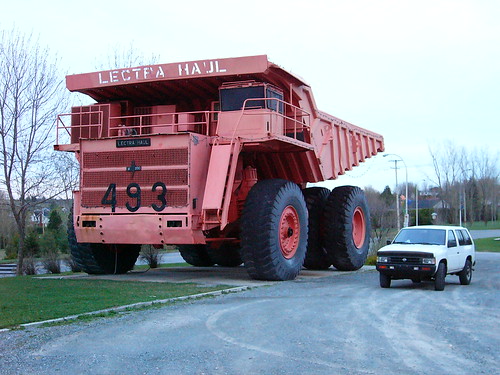
    Dump Truck Equipment Leasing


    Dump Truck Equipment Leasing may fall under the more general leasing category of Heavy Equipment Leasing (meaning, dump trucks are classified as heavy equipment like bulldozers, backhoes, and excavators) or Commercial Equipment Leasing. The numbers show that more than $3 billion in construction equipment (like dump trucks) are leased annually by US companies alone. Why pursue Dump Truck Equipment Leasing?

    Some companies opt for Dump Truck Equipment Leasing because they are trying to expand the business and need their existing cash flow for this. Others may choose Dump Truck Equipment Leasing because their existing equipment suddenly failed to function (due perhaps to old age or defects) so they need functional equipment quickly to keep operating. Dump Truck Equipment Leasing is also good for companies that want to gain a financial edge over their business rivals by being able to reap savings thru leasing equipment (as opposed to buying.) Dump Truck Equipment Leasing would probably appeal to contractors in the construction business that will always need dump trucks.

    If you get lucky or are just plain smart about choosing a lender, you might be able to get a Dump Truck Equipment Leasing arrangement customized to your business situation. This is very important because businesses (even those in the same industry) may experience different business cycles, and cash flow patterns, while company owners may have different ideas of what constitutes as a sufficient budget. Construction projects are sometimes seasonal in nature, so you need a Dump Truck Equipment Leasing arrangement which can give you the flexibility of adjusting payments to the months when business is peaking and you can afford the payments on the Dump Truck Equipment Leasing arrangement.

    Some lenders may offer a very quick processing time (maybe even as fast as 24 hours sometimes) which gives company owners who are in a hurry an advantage for acquiring their dump trucks quickly. If you have the right documentation on hand, you could find yourself signing your Dump Truck Equipment Leasing contract fairly soon after submitting the leasing requirements.

    Be sure though that the leasing options the Dump Truck Equipment Leasing arrangement you enter into has the right provisions you were seeking. For instance, if you are expecting to purchase the dump truck after the lease term has been completed, look carefully through the contract to make sure that that stipulation is there.

    Also, verify with your company accountant if your corporate income stands to gain via deductions from such a Dump Truck Equipment Leasing arrangement. This would probably be dependent on some tax laws or business tax conditions that only accountants may be updated about.

    Industrial Equipment Leasing Options That Help Businesses Grow


    With all of the different industrial equipment financing options available, it can be difficult for businesses to decide which of these is best for them. Industrial equipment leasing options have been designed to help all kinds of companies including seasonal, those with bad credit, and those with larger needs. Selecting the right financial option will allow a business to flourish and exceed its goals. The payment plans can be fully customized to meet a unique set of needs, but here are some of the main structures businesses should be aware of before making a decision.

    Traditional Industrial Equipment Leasing

    Businesses choose a traditional lease program when they want to 'rent' the needed items rather than buy them. This style of solution gives the company the opportunity to make low payments that are deductible on their taxes in many situations because they are considered an operating expense. The items are paid for at a fair market price, there is no end to the term, and it can be returned easily when it is no longer needed. This option is ideal for items that depreciate quickly.

    Prepaid Or Capital Industrial Equipment Financing

    Although it works similar to traditional leasing, the buyer owns the items. The plan involves a series of small payments that are paid until the end of the term when the purchase price and interest has been paid in full. Then, the buyer pays a small percentage of the original price tag and sometimes a single dollar to take over ownership of the items. For businesses with less than perfect credit, payments can be made ahead of time to further lower the payments and show you can make the payments.

    Postponed Payment Plans

    Created the same as the previous two industrial equipment leasing plans, a postponed or deferred payment plan gives companies two to three months before making their first payment. These are ideal for new businesses and those who will need a few months before seeing the return on their investment. Businesses get a few months to get up and running before having the added strain on their cash flow.

    Seasonal Programs

    Seasonal industrial equipment financing is ideal for those who have seasonal income such as those in the agricultural or road construction industry. Because these businesses make their profit in a few select months, making large payments during the off-season can be extremely difficult. This plan lets businesses decide which months they will make payments, the amount of each, and the total length of the plan. Depending on the agreement, companies may have to make small payments during the off-season, which generally adds up to the interest only.

    Leaseback Programs

    Businesses that purchase equipment who then change their mind and wish they had taken payments have an option as well. With a sale-leaseback or leaseback option, the company sells their items to the financial institution and sets up industrial equipment leasing to buy them back for payments that generally last for three months until it is paid. This frees up cash flow and allows the company to invest in things that increase in value rather than depreciate.

    Progressive Payment Plans

    This is a common payment plan for those such as contractors who purchase items needed for a series of upcoming contracts that will see their profits increase as the term goes on. Instead of having a standard payment, these plans have payments that start small and gradually get bigger to match increasing profit levels and pay the financing out faster.

    Master Leasing

    Businesses that will require a large number of equipment pieces in a certain amount of time often choose a master industrial equipment financing plan. The agreement as a whole is configured and signed. Then, as they need and acquire the items, a separate term and term length is assigned for each purchase. This makes large investments far more manageable. Industrial equipment financing needs to be affordable yet large enough for companies to get the equipment they need to reach their financial goals. The right industrial equipment leasing plan will give companies the freedom to pay what they need to when they can afford it to enable them to be as successful as possible.

    Monday, November 17, 2008

    Information About Medical Equipment Leasing


    State-of-the-art medical equipment is within your reach with the right equipment lease plan. Buying new medical equipment can require a considerable cash outlay when purchasing it outright or taking a loan. With equipment leasing you have an alternative that makes more sense for your business and can save you money.

    Medical equipment leasing enables business to free up a large amount of capital. Lease cycles generally range from 24 to 60 months. They also offer certain flexibility to upgrade medical equipment with minimum of capital investment.

    The biggest advantage of medical equipment leasing is that it ensures 100% equipment financing with low rates. You can take advantage of generating revenue with no money down. Leasing also provides advantages such as tax deductions, immediate write-offs, balance sheet management, easy upgrades, improved cash flow, better asset management, and fast processing.

    You have two options for medical equipment leasing; either acquire equipment at a stated amount or for Fair Market Value. There is a misconception that medical equipment leasing is only restricted to old equipment, but leasing is also available for new equipment such as x-ray, lab equipment, laboratory equipment, examination tables, physical therapy equipment, office equipment, CAT scan machines, and diagnostic equipment.

    Office furniture can also be acquired in medical equipment leasing. This allows medical professionals or doctors to deliver the highest level of services to patients. With the help of medical equipment leasing, you can transform your office into a state-of-the-art medical care center.

    All Media Capital is the leader in the equipment leasing field. AMC can help your business upgrade and install medical equipment, and provides customized leasing programs. Apart from providing medical equipment leasing it also provides medical financing and commercial mortgage financing. For more information on medical equipment leasing, medical equipment lease, and medical equipment leasing companies visit http://www.allmediacapital.com/.

    SBA Loans Tighten Requirements -


    From: The Salt Lake Tribune

    Scott G. Davis is president of Mountain West Small Business Finance, which has loaned more than $1 billion to Utah businesses. Despite the tighter lending climate, he says business owners can still get loans.

    How has the financial downturn affected small business loans?

    "There has been impact in two key areas. First, businesses that can put their expansion plans on hold are doing so because of the economy's uncertainty. We believe that once the economy starts to show sustained improvement, these owners will be looking for expansion capital and will proceed with their plans. Secondly, we have seen marginal credit-quality deals either being turned down or financing is offered but at a much higher costs to the borrower. Lenders definitely are being much more careful about projects they are willing to finance."

    What types of loans are available?

    "From the standpoint of Small Business Administration programs, we are open for business. SBA has plenty of money to lend. In reality, SBA doesn't lend directly - it guarantees loans from banks and loans through Certified Development Companies. SBA's credit policies have not changed and it is eager to assist banks to make credit available for business growth and job creation. For instance, working capital and debt-restructure needs are best served by the SBA's 7a Loan Program. This is a bank or credit union loan guaranteed by the SBA with a variety of terms and rates. Financing for real estate and equipment is available through the SBA's 504 Loan Program."

    How difficult is it to get a loan?

    "An SBA loan application is the same as a typical bank commercial loan application, with the exception of a couple of extra 'read and sign' government forms. A loan for a sound business purpose, with qualified, experienced management and reasonably good cash flow, can qualify for SBA financing. Loans must be adequately secured by available collateral and business owners should be prepared to invest 10 percent to 20 percent of the anticipated cost as a down payment."

    Must businesses jump through more hoops in this downturn?

    "Most of the horror stories that float around about getting an SBA loan have been exaggerated and are now urban legends. Time from submission of a complete loan application to the SBA for a written loan approval is usually not more than eight to 10 working days. Sometimes unexpected complications can extend that approval, but for the most part, if you work with a bank and Certified Development Co. that is knowledgeable and experienced in SBA lending, the process won't hurt too bad."

    ~~~~~~~~~~~~~~~~~~~~~~~~~~~~~~~~~~~~~~~~~~~

    I like the positive attitude... but hey, its UTAH! :)

    California Fires - Pictures from Brea


    I took these pictures on Sunday November 16, 2008 at around 6:30am while driving home on the 57 freeway. The Placentia/Brea fire was so smoky you could not see any blue in the sky, it was like the surface of Mars. The Carbon Canyon/Chino Hills fire had also left its smoky imprint across the sky.

    The map at the top shows my route, the pictures were taken in chronological order while driving north on the 57, and where the man is standing on the map is where the LAST pic was taken (from top to bottom). Both my friend in the car with me and I were covering our mouth and nose with wet t-shirts so we could breathe a little easier.

    The smoke was so thick I could not see how anyone in Fullerton, La Habra, La Mirada, maybe even Norwalk, Cerritos or Whittier would be able to operate that day. You literally had to tell your body "keep breathing; inhale, exhale."

    To everyone in those areas reading this, I hope you all are breathing a little easier.

    And to all the victims of the fire I said a few silent prayers for your safety.

    Friday, November 14, 2008

    November Tax Tips - Buy Now or Later?


    "If you’re considering the possibility of purchasing business or farm equipment* in the next four to six months and cash is running low, you might consider initiating a lease or purchasing it on credit by December 31st. IRS Tax code “Section 179” allows qualifying property to be expensed entirely or a higher portion to be expensed along with regular depreciation. The Section 179 limit for 2008 is $250,000 (up from $108,000 in 2007). Also, in 2008 there is a special depreciation allowance of 50% of the property’s depreciable basis after any section 179 deduction and before figuring your regular depreciation deduction.

    Section 179 deductions are also limited by taxable income derived from the active conduct of all trades or businesses including: wages, salaries, partnership income, corporation shareholder income, and gains from sales of business assets. It does not include rental or investment income. A husband and wife, whether filing joint or separate returns, are treated as one taxpayer for the $250,000 limit.

    You can find tax savings calculators on the Internet, but basically you can figure 35% (15% FICA and 20% Income) tax savings on the amount you choose to expense. For instance, if you’re considering the purchase of office equipment totaling $4,000, your tax savings would be approximately $1,400. In most cases that tax savings is greater than the interest amount you will pay over the course of the lease or loan. Of course you need to avoid loan scams that charge an extremely high rate of interest (i.e. payday loans, car title loans, etc.)

    In the case of a lease that is initiated in prior to January 1st, you have the option to expense the entire amount in the year of initiation or deduct the payments over the course of the entire lease.

    *Vehicles have additional limitations; please talk to your tax advisor if you’re considering the purchase of a business vehicle."

    ~~~~~~~~~~~~~~~~~~~~~~~~~~~~~~~~~~~~~
    As the picture says... time is running out! If you are considering a capital equipment purchase I would appreciate the ability to show you the effects the section 179 change will have on your 2009 bottom line. Email me: apaladino@allmediacapital.com

    Healthcare Summit Preview: What's On Tap For 2009?

    From: http://www.crn.com/healthcare/212002447

    Health care appears to be the most resilient vertical market in tough times, although not even the most optimistic economic observers would deny these times are certainly tough. But with the incoming Obama Administration set to make health care a top priority, in combination with health-care's stability, that will mean new opportunities for solution providers.

    As hundreds of health-care industry CIOs and top vendors in the vertical market prepare to gather this weekend in San Diego for Everything Channel's Healthcare Summit, solution providers are also looking to see what's on tap for health-care opportunities in the new year.

    "The health-care community seems to be divided into a number of different thought processes right now," said C.J. Ezell, president of The ASI Group, a Mobile, Ala.-based health-care solution provider. "One group says the economy's in the tank so we need to spend no money at all. Then there's a whole other group of people who suggested the wrong party's just been elected because the Section 179 deductions we were used to having are, they fear, never going to come back, therefore we need to spend as much as we can now."

    (Section 179 of the IRS Code, to which Ezell refers, allows a sole proprietor, partnership or corporation to fully expense tangible property in the year it's purchased.)

    The credit crunch is similarly vexing, Ezell suggested.

    "I had a conversation with a guy who said, 'I'd love to buy right now, but if I spend all my cash and in six months something big comes up for my practice, I won't be able to borrow any money," he explained. "For lots of people, that's the kind of thinking that's out there right now."

    Ezell in 2004 converted The ASI Group from primarily a break-fix business to specializing entirely in health care, and he's since seen steady growth that's put The ASI Group on track to do about $1 million this year with net profits in the 30 percent range. Ezell has a particular focus on dental office clients, which he suggested represent one of the most untapped potential business opportunities for solution providers out there.

    "I was a medic for eight years before I got into IT, so I understand the language," he said, referring to how solution providers who understand health-care terminology and the vertical's specific problems have a much easier time landing business than those who try to wing it. "When you can understand the language and talk to doctors on their level -- convey to them a sense of 'I understand' -- that instills such confidence in you from their standpoint. I mean, a LAN is a LAN is a LAN, but when you start talking about PCs in a health-care environment where you're doing patient charting, that's different."

    Where else do successful health-care VARs focus their efforts? Anywhere a unified communications system can help, for one.

    "One key initiative for us going forward is going to be to communicate the whole unified communications piece effectively," said Doug Chesler, president and CEO of Leverage Information Systems, a systems integrator based in Woodinville, Wash.

    Leverage specializes in wireless network solutions, and the VAR has seen many a sales win in health-care environments, thanks to its ability to juggle multiple factors and come up with turnkey solutions. In order to solve communication problems among staff members at Skagit Valley Hospital in Mount Vernon, Wash., for example, Leverage combined a Cisco (NSDQ:CSCO) network with the Dukane ProCare 600 health-care communication system, the Emergin Gateway (NYSE:GTW), and Vocera's instant voice communication system, the Badge.

    On top of spot trends, electronic medical records (EMR) remain general health-care IT's biggest buzzword. According to market research house International Data Corp., the EMR market is growing at a rate of 15 percent a year, and is expected to reach $4.85 billion by 2015.

    "EMR is all the focus, especially since there are incentives the government has put in place [for adoption]," Ezell said. "If you're [solution providers] not into EMR, within the next two to three years, you're really going to be too late. Take the plunge and get into it."

    Follow the action from Everything Channel's Healthcare Summit in San Diego on ChannelWeb, starting Sunday and continuing through Wednesday morning.

    Circuit City to close all Stores: Files BK


    Im not suprised tho I am a lil depressed. I guess that extended warranty I got isn't worth much now.

    “Know What You Are Leasing or Else!”


    Traditional balance-sheet lending works well for commercial loans, but it is not adequate for equipment leasing, where characteristics of the equipment affect the creditworthiness of the transaction. Too many leasing companies decide to make a lease without considering important facts about the equipment itself. Asking the proper questions about the equipment may help you strengthen the credit or make you question it.

    Here are 13 questions you should ask about the equipment underlying every lease.


    Can You Describe the Equipment Completely?


    A complete equipment description sounds simple; however, an adequate description rarely makes it to the lease agreement. Vendors have idiosyncratic identification systems that may be unclear to you. Even after you have the invoice in hand, you usually must telephone the vendor to understand the equipment, how it is identified, and what is or is not an attachment or special part. Many lessors have tried to retrieve their equipment from bankruptcy trustees, landlords, or other creditors, only to find that a poor description makes it difficult or impossible to identify and claim the leased equipment.

    It is important to include a plain English description of the equipment—as well as the more technical information—on a Uniform Commercial Code (UCC) filing. Otherwise, inexperienced purchasers may think your equipment is lien free and buy it from the lessee. The UCC filings would give you the right to retrieve your equipment, but once it has been sold out of trust, it is almost impossible to discover who purchased it and where it is. Even if you can learn who purchased the equipment, you probably will face a legal fight to establish your right to the equipment.

    Proper description also allows you to use guidebooks to distinguish the particular equipment being leased form similar equipment and to verify the proper purchase price. Many times vendors give sloppy descriptions to conceal price increases to handle payoffs on poor trade-ins, unpaid repair bills, or even kickbacks to your customer. Lack of proper or complete equipment descriptions indicates that something is amiss in your lease request.

    Who is the Manufacturer and How Strong Is the Distributor or Vendor?


    Manufacturers and distributors of new technology sell equipment with lots of sizzle, but they themselves tend to be low on experience. Leasing equipment based on a new technology is a major risk if the manufacturer or distributor does not have the staying power to remain in business over the life of the lease. The manufacturer must be financially secure to supply spare parts and to live up to warranties and guarantees. A strong lessee is little comfort when equipment fails to perform and the distributor is out of business. Lessees hate to pay for equipment that doesn’t work and will use every legal method available to stop paying rent.
    Even for proven equipment, a distributor or vendor in weak financial condition could cause hardship and expense for your customer. This could have a material effect on the creditworthiness of the transaction.

    In general, distributors that are in poor financial condition make promises that are difficult to keep. Discuss with your lessee all warranties and guarantees, both verbal and written, offered by the vendor. View unusual promises with skepticism; avoid distributors who make such promises.

    How Do Total Costs Break Down?


    Vendors usually are very reluctant to break down the total cost of the equipment. By investigating the proper description and identifying each individual piece of equipment or attachment, you can learn what proportion of the total cost is hard costs, or costs for the equipment itself. The remaining soft costs are generally irretrievable. They include installation, transportation, site preparation, permits, taxes, training, after-the-sale support, technical assistance, extended service, extended warranty, insurance, operating software, licensed software, and so on. The mere existence of soft costs should not cause alarm about a potential lease. However, it is important to identify soft costs in order to assess the value of the leased equipment.


    Occasionally, improper sales tax is assessed because soft costs such as transportation, site preparation, and technical assistance are included in the equipment cost. If these items are separated out, the extra sales tax may be avoided. Also, proper identification of all costs is necessary to evaluate the term and structure of your lease.

    What is the Useful Life of the Equipment?


    Unfortunately, many bankers and lessees are accustomed to arranging leasing terms that match loan terms. Just because the customer may have used five-year financing before does not necessarily mean that five years is the correct term for the lease. The term should match the period that the lessee plans to use the equipment. In many cases, the useful life of the asset depends on use. For example, a forklift may be used either in a foundry to handle forms of molten metal or in a candy factory to load boxes of marshmallows on the back of a delivery van. The useful life of this equipment varies substantially because of these two uses. The collateral value of equipment under lease is therefore very dependent upon its use. It is necessary to determine how your lessee is going to use the equipment and then match the term of the lease to the useful economic life of the equipment.

    Leases with terms that do not match the use of the equipment generally incur larger losses in default because customers had sought longer terms to improve cash flow. The lessee who seeks a term of lease that is longer than the useful life of the equipment ultimately presents a risk to the lessor.

    Where Will the Equipment Be Located?Will It Be Moved?


    The location of equipment is important for many reasons, especially for tax considerations. Your lessee is responsible for paying all taxes assessed on the equipment (except your income tax). Nevertheless, if the lessee fails to pay, you will be responsible for the unpaid tax because you are the registered owner of the equipment. Lessees often move equipment from one tax authority to another (usually from one state to another). If the equipment is on site when the local tax is assessed, taxes may be due and neither you nor the customer may know about them.

    A change in location sometimes signals a change in use. Many companies start out with an assumption about how the equipment will be used, but changes in business may cause them to make a change. This is common with companies that have multiple subsidiaries engaged in different types of business. It also is not uncommon for your equipment to be subleased for idle periods. Explain to your lessee that any change in location or use must be reported and that this change may result in an adjustment in rent or term. It may be wise to require in the lease documents that any change in location must be reported or be held in default.

    Who Will Operate the Equipment?


    Asking who will operate the equipment gives you the opportunity to inform your customer about unauthorized use. The equipment should be used only by company personnel on company business. As the owner of the equipment, you must be sure that no one outside the company can operate the equipment and that no employee can use if for personal use. Unauthorized use generally invalidates insurance and sometimes invalidates the manufacturer’s warranties and guarantees.

    On occasion, some types of equipment may require special technicians or operators. You should investigate how this affects the value of your equipment. Often, equipment values can suffer as much from a shortage of experienced personnel as from the lack of a secondary market.

    When Will the Equipment Be Delivered?


    The delivery date determines when your equipment lease begins; often this can be up to 90 days in the future. Therefore, you may quote a lease rate as a function of prime or some other benchmark to maintain your spread if interest rates change.

    This covers your rate risk, but delivery dates also raise other issues to discuss with the customer. For example, an immediate delivery generally means that the equipment being replaced has failed and the need for a replacement is critical. This should make you ask whether the replaced equipment was used beyond its useful life and question whether or not the lease term is appropriate. The equipment may have failed during a period of heavy use; therefore, a new lease in full years would end at the wrong time of year in the middle of the heaviest use. Try to decide the best time for a lease to end, so your customer does not have to make important end-of-the-lease decisions at inopportune times.

    Is This Replacement or Additional Equipment?


    The question of whether the equipment is replacement or additional leads to the cash flow to pay rent. If the equipment is additional, it may depend on revenues form increased production to pay your rent. These revenues may be in the future after the product has gone to market. Therefore, rent may need to be smaller at the beginning of the lease to compensate for lack of funds.

    If the equipment is being replaced, information about the useful life of the old equipment would be valuable for structuring the lease.

    What Will Be the Costs of Removing the Equipment?


    The value of equipment that requires special wiring, major site preparation, or unusual installation procedures can be eroded seriously by the cost of removing it. High removal costs usually eliminate residual value of the equipment and give rise to serious tax questions. If removal costs cancel out the value of the equipment, it can be said that the equipment has a single use—good only to the user. Therefore, the IRS would consider it to be purchase or financed—not leased for tax purposes. To qualify for a lease, the equipment must have multiple purposes, and it must be possible to remove and reassemble it at moderate expense.

    Will the Equipment Need Major Maintenance during the Term of the Lease?


    If the equipment will require major expenditures for overhaul or repair, the customer may not be able to meet rental payments and pay for the overhaul simultaneously. Compare the number of hours the manufacturer suggests the equipment be used before an overhaul to the number of hours your customer plans to use the equipment. Then plan your rent to compensate for major repairs or overhauls.

    If a major overhaul is necessary when your lease ends, keep this in mind when evaluating your residual risk. Also, knowledge of the timing of major repairs should affect your collection effort if your customer begins paying slowly. Lease terms that do not take repairs into consideration generally increase risk and guarantee losses in default.

    What Are the Vendor’s Payment Terms?


    Interest begins accruing on loans when the bank disburses the funds to the customer. In an equipment lease, there is no connection between when the customer begins paying rent and when the bank pays for the equipment. You should review each vendor’s invoice to ensure that you comply with the vendor’s payment terms. Many vendors do not require payment until 30 days after the customer accepts the equipment. You can enhance the yield on an equipment lease by 35 basis points or more for each month that you can delay payment to the vendor. Many vendors are on manufacturer programs that allow them to pay for equipment up to six months after the sale. If your vendor is a customer of the bank or you know the vendor, find out exactly when the equipment must be paid for. If possible, take advantage of delaying payment to the vendor to enhance your yield.

    Is Insurance Protection Adequate?Is the Insurer Reliable?


    In today’s volatile insurance market, rates and coverage can vary substantially. Carefully evaluate both the insurance coverage and the insurance carrier. Large deductibles and exceptions combined with weak insurers have left many leasing companies with damaged equipment and no recourse to the insurance company. Do not place insurance policies in the customer’s file until the proper personnel read and qualify them. Explain insurance requirements before the customer takes delivery of the equipment.

    Will the Customer Modify the Equipment toPerform a Special Task?


    Many customers take good, solid equipment and alter it for a special purpose. On the surface, the equipment appears valuable. However, when the equipment is altered its purchase price is inflated to make it handle a special task. In default, altered equipment must be returned to its base state. The cost of reconfiguring the equipment to make it marketable and the increased purchase price may eliminate any equity or even create a serious loss. Exercise special care when leasing equipment that will be used for a limited or unusual task.

    Summary

    For an equipment lease, evaluating the equipment is as important as evaluating the customer’s creditworthiness. By knowing as much as you can about the equipment, you can structure the lease to take into consideration facts that will identify the true risk of this particular credit.
    In this column, I have addressed questions that apply to all types of equipment. Naturally, there will be other questions that apply only to special kinds of equipment within specific industries. For a computer lease, for example, you might want to ask whether it has been around for a while and is therefore subject to change. Or you might want to know whether or not the computer could be upgraded or expanded.

    Knowing the right questions not only will protect your bank from risk but also will help you to structure the lease to best serve the customer’s needs. Taking care of the customer’s true needs always makes a better customer than reacting to the customer’s assumptions.


    By Mr. Terry Winders, CLP


    ~~~~~~~~~~~~~~~~~~~~~~~~~~~~~~~~~~~


    Always good advice. Even as a broker I like to read the straight-forward and accurate advice of Mr. Winders, and to share it with my readers.


    Shared Items

    Mailing List